
Vibration plates can help manage lipedema symptoms and I’ve posted about them in the past. I still get a lot of questions, so I wanted to dedicate another post to those questions, which include:
- What are some of the benefits of whole-body vibration for lipedema?
- How should I use my vibration plate and how often?
- What is the best vibration plate for lipedema?
- Why does it make me so itchy?!
Before we get started, please remember that I am just a woman with lipedema. I’m not a doctor and you should consult with your medical team before changing your self-care routine. Vibration is generally not recommended for individuals who are pregnant, have recently undergone surgery, have artificial joints, or have pacemakers. Read more about contraindications for vibration.
Note: Buying through Amazon links in this post helps support Sturdy Woman. I may earn a small commission on your purchase but that never influences my recommendations.

Are vibration plates good for lipedema? What does a vibration plate do?
Vibration plates are often recommended for lipedema patients because they increase circulation and stimulate lymph flow. This means they can help manage swelling and decongest tissue. Many patients find the vibrations relaxing and report relief from limb heaviness and reduced pain. Whole-body vibration is low impact, it only takes a few minutes a day, and many people feel results almost immediately. (Read more here.)
Sounds great, right? There’s a reason vibration is so popular!

What is the best way to use a vibration plate for lipedema?
What is the best way to use a vibration plate for lipedema? A little bit goes a long way! Your vibration plate will likely come with a hundred or more speeds. You only need the lowest ones for lymphatic benefits. Mine includes pre-set programs that rotate through different speeds every few minutes. I use it on the three lowest program settings: 0, 1, and 2.
You can also adjust the intensity by changing the position of your feet or hands on the vibration plate. In the video you can see how mine says “walking” in the center. “Jogging” is a little further out. “Running” appears all the way at the edges. This means you will feel the vibration less intensely when positioned in the middle and more intensely when positioned at the edges. In the video you can see the difference in the jiggling as I move my legs.

The most common way to use a vibration plate for lipedema is to stand on it. Position your feet where you feel comfortable and bend your knees slightly. Locking your knees will make the vibrations feel more intense in your head and upper body—probably not something you want! You can do calf raises, squats, or other exercises while you are here, but it’s also okay to just stand. Here’s a poster with vibration plate exercises you can check out for more inspiration.
As I mentioned, you can also use it seated in a chair or on the couch. Try resting your arms on your legs to get some benefit there, too.
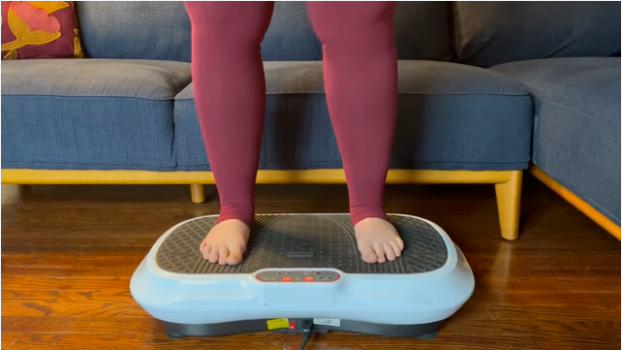
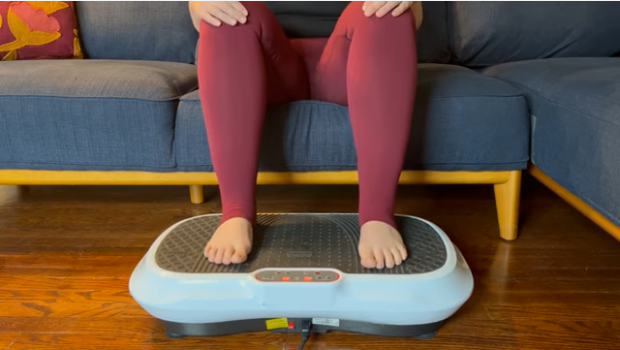
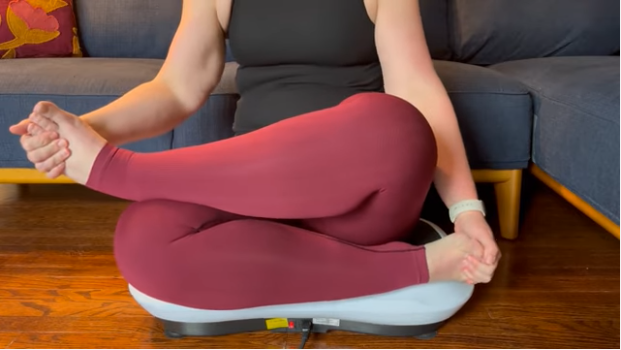
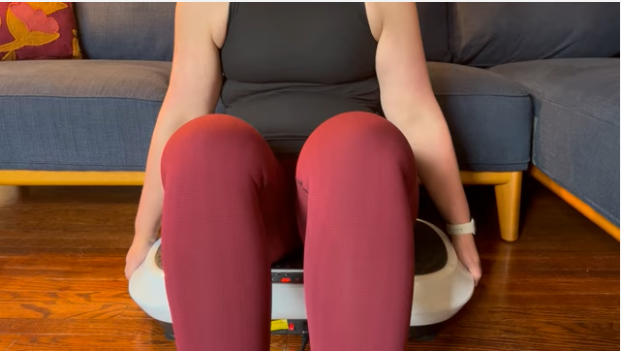

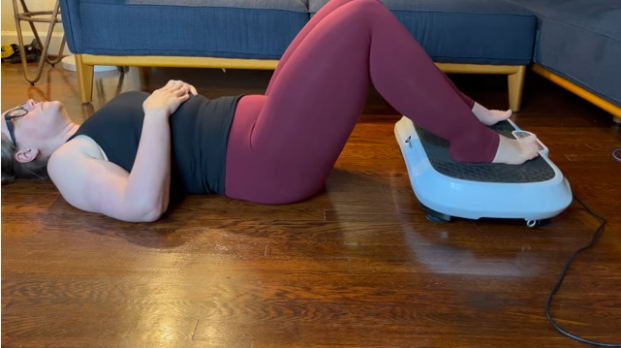


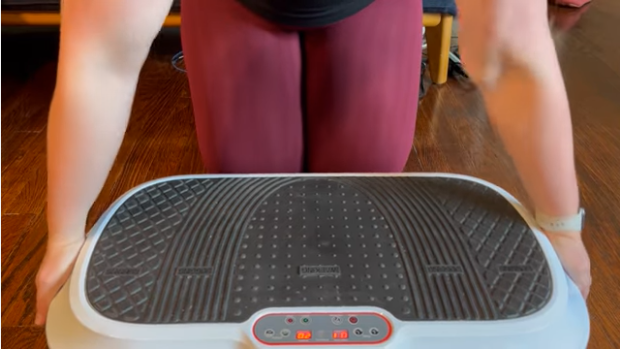
Other variations include sitting on it or, my favorite, lying on the floor and placing your feet or calves on it. My legs are always tight from running and biking, and this feels like a massage!
But what about arms? I’ve started getting more questions about arm lipedema. If resting your arms in your lap isn’t enough, place your hands or forearms directly on the vibration plate. You’ll want to experiment with what feels comfortable because the vibrations can become a little intense in your head. To mitigate this, keep a slight bend in your elbows so they can work like a shock absorber. In the video you can see the difference in how I shake when my elbows are locked versus when they are loose. Take it slow and back off if you start feeling any discomfort.
What’s the best vibration plate for lipedema?
The best vibration plate for lipedema is one that oscillates, which means that it rocks side to side. You can see mine in the video, slowed down to exaggerate the up-and-down movement.
When choosing a vibration plate, consider how you plan to use it. Do you want to stand or sit on it? If you want to stand on it, you’ll need to consider the weight limit when choosing a model. The limit on my Waver is 330 pounds. The Mini Waver has a 260-pound weight limit. The larger Rumblex goes up to 500 pounds. Weight limits are less important if you plan to do your vibration seated.

If you want to use it standing, but want some extra stability, there are also vibration plates with handles.
One thing I love about the LifePro brand is that their vibration plates come with a lifetime warranty. If you ever have a problem, call the company and they’ll replace it. That said, I’ve had mine for more than four years and it’s still going strong.
One final thing to consider is whether you’ll be moving it around. Vibration plates can be heavy, so consider a lighter-weight unit if you’ll be stowing it and setting it up daily. My Waver weighs 31 pounds, but the Mini Waver is just 26 pounds. I keep mine next to the couch so it’s always ready to go, but you might not have room for that.

How often should I use my vibration plate?
The manufacturer of my vibration plate recommends a maximum of 30 minutes a day. If you plan to do that much, break it into two 15-minute sessions. Do one session in the morning and one in the evening. It’s also okay to do shorter sessions! The most important thing is to listen to your body. Vibration will feel like exercise to your body, so it’s essential to gradually increase the intensity and duration.

Why does vibration make me feel itchy?!
Some of you have written to me, expressing that vibration makes you itchy. This can be a normal response to increased circulation. The reaction is common if you are new to vibration and using your plate on a high setting. Try a lower speed and see if that helps reduce your itchiness.
That said, in rare cases, people can be allergic to vibration. Stop using it and consult your doctor if you experience symptoms such as hives, redness, and severe itching that lasts for some time even after you stop. Here’s an article where you can read more about vibration allergies.
Receive Sturdy Woman Updates:
Summary – TLDR
Vibration plates can be a helpful addition to a lipedema self-care routine. They help improve circulation and reduce swelling, which can make a significant difference in symptoms. Using a vibration plate only takes a few minutes a day, and many people notice results quickly. Vibration therapy isn’t recommended for everyone (see contraindications). It’s important to consult your medical team before starting any new treatment or exercise routine.
To use a vibration plate for lymphatic drainage, look for one that oscillates and start at a low speed. The LifePro Waver is a great all-around option. They also have a Mini Waver and a more heavy-duty Rumblex that could be good options depending on your needs.
Whether you’re standing, sitting, or lying down, there are many ways to incorporate vibration into your self-care routine. Listen to your body and consult your healthcare provider to find what works best for you.
Share Your Experience
What other questions do you have about vibration and lipedema? What’s your favorite way to use your vibration plate and how has it helped you? Let us know below in the comments! Sharing your experience helps everyone in the community.
 Sturdy Woman
Leave a comment