Low-impact exercise can be very beneficial for lipedema and lymphedema patients. Any activity that engages your calves and leg muscles will help stimulate lymph flow, which can reduce swelling. Rebounding, or bouncing on a mini trampoline, makes it easy and fun.
BCAN sent me one of their most popular rebounders, and I’ve been using it for the past two months. It’s a sturdy trampoline, and there’s a lot to like. There are also some things to keep in mind, especially if you live in an apartment and are already using devices like a vibration plate or pneumatic pump.
As with any change to your lifestyle, be sure to consult your doctor before incorporating rebounding into your self-care routine. It isn’t right for everyone. This includes those who may be pregnant. It also includes anyone with a detaching retina or heart problems, such as high blood pressure.
Review of BCAN Rebounder: 48” with Handle
The rebounder I have is the 48-inch model from BCAN. It features bungee cords instead of springs and has a handle for stability. I’m 5 feet 5 inches tall, and the handle reaches about hip height on the highest of the three settings. The bungee cords are really quiet compared to the spring trampoline I used as a kid, so noise from the unit isn’t a big issue.

The rebounder arrived folded in a box and took me about 30 minutes to assemble the first time. I say the first time because, yes, I’ve done it more than once. BCAN markets this as a foldable trampoline – and it is – but be aware that you have to disassemble it quite a bit to fold it. It weighs about 20 pounds fully assembled.
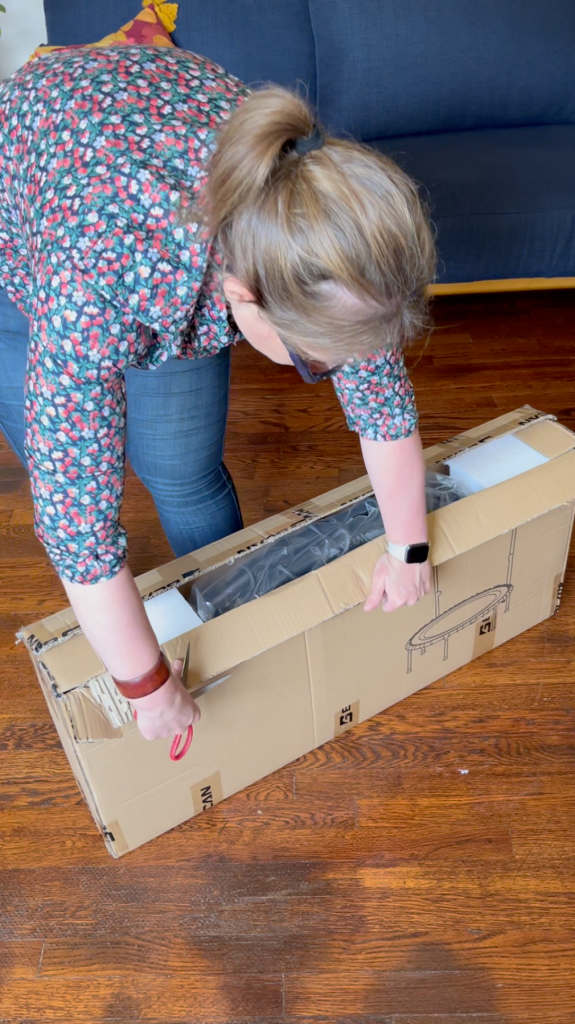
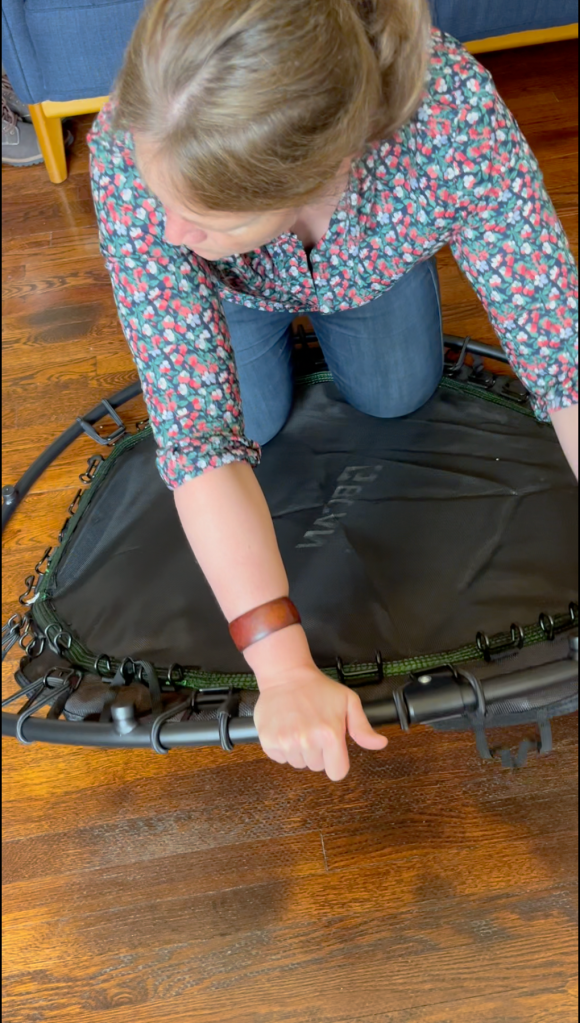
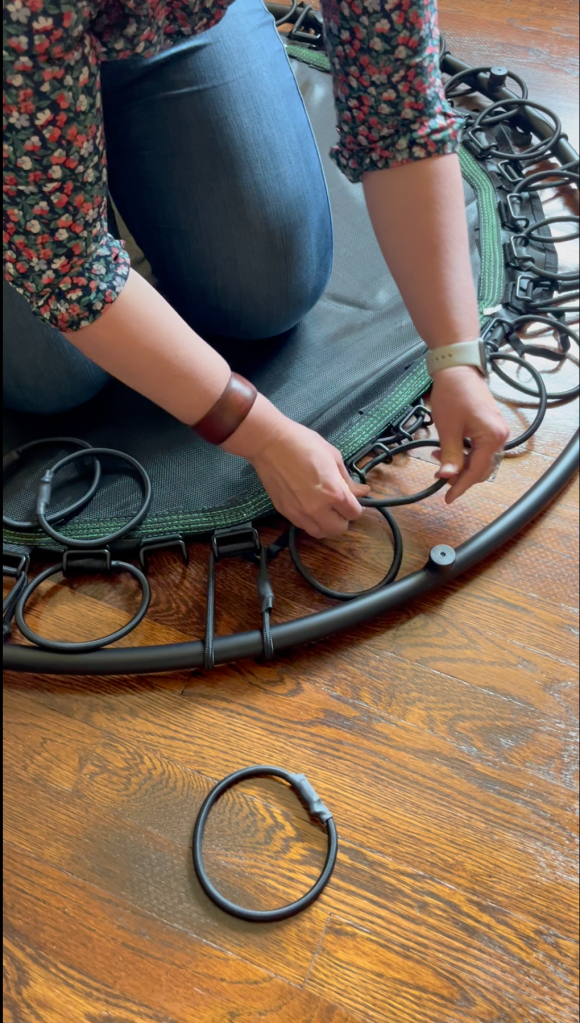

One thing I really love about the BCAN rebounder for lipedema patients is that it has a weight limit of 550 pounds and is specifically designed for adults. Mini trampolines are often sold for children, so be sure you buy a model like this that is built for adults!
You can buy it with or without the handle, but I’ve used it more than I expected to. Yes, I accidentally bounced off it once (you can see that in the video). Thankfully, right onto my couch! You’ll appreciate having something to grab onto.

Benefits of Rebounding for Lipedema and Lymphedema Patients
Rebounding is a low-impact workout that strengthens your leg and core muscles. It can help boost lymph flow and reduce pain and swelling in your lower body. I believe it could be especially useful for those looking to start moving but aren’t yet comfortable with (or don’t enjoy) walking, swimming, or other gentle exercises. You can do rebounding at home in privacy. You can watch TV or listen to music while doing it and it doesn’t take much time. I often find myself jumping on it while doing other things, like waiting to take something out of the oven or doing laundry.
Rebounding is considered a form of cardio exercise, but its intensity varies based on how you bounce and your starting level of cardio fitness. Bouncing at different intensities increases my heart rate to about a light walking pace. I can even break a light sweat. Your results will depend on your fitness level and goals.
Any type of exercise is helpful for managing stress, and—like with most things—stress can make lipedema worse. In my experience, it’s been nearly impossible to lose weight during stressful times, and swelling has increased. (See my post video on Stress and Lipedema.) Rebounding is really fun, and I challenge you to do it without smiling! How’s that for stress relief?!


How does a rebounder compare to other self-care devices like a vibration plate or pneumatic pump?
How is a rebounder different than a vibration plate? Rebounding is a more active form of exercise than whole-body vibration. Patients with lipedema and lymphedema often use a vibration plate by passively sitting or standing on it. (See my post How Vibration Plates Help Manage Lipedema Symptoms.) This makes it more of a rest and recovery activity. Rebounding requires you to engage your muscles to bounce actively, making more of a cardio activity.
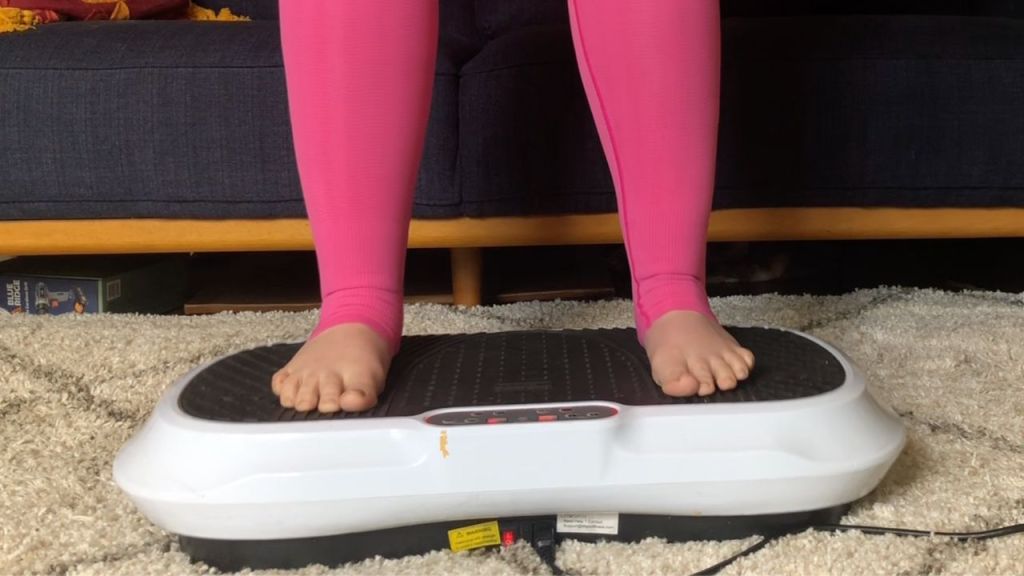
Honestly, I don’t believe most people need both. This is unless they are using rebounding as their main form of movement or exercise. I recommend choosing the one that best fits your lifestyle. I’d love to hear what others in the community think and if anyone is benefiting from using both!

What about pneumatic pumps? Research suggests that doing whole-body vibration before manual lymph drainage massage, which pumps simulate, can make it more effective. I usually use my vibration plate for 15 minutes before using my pump. I suspect rebounding could have similar benefits. Remember, I’m not a doctor. However, stimulating your lymph and opening things up would likely make it easier for everything to flow. Has anyone tried rebounding or even dry brushing before pumping? Let us know in the comments!
Receive Sturdy Woman Updates:
Things to Consider: Using a Rebounder in an Apartment
I live in a small upstairs apartment. This was the biggest challenge I faced with rebounding over the past two months. The rebounder takes up almost half my living room and is just too large for me to keep out every day. I thought that since it was foldable, I could easily store it under the couch, but even as I’ve gotten better at assembling and disassembling it, it has discouraged me from using it. If you have a basement, garage, or even a backyard, you can set it up and bounce for a few minutes each time you walk by. You’ll probably really enjoy it.
I also think my downstairs neighbors would give mixed reviews. I initially used it on my bare hardwood floor, and the creaking was embarrassingly loud. It improved after I replaced my living room rug, but the floor still shakes if I bounce up off it, like when doing jumping jacks. When I only bounce on my toes and shuffle my feet, I doubt they hear anything.
Due to space constraints – and out of respect for my neighbors – I asked my landlord if I could put it in our community gym across the street. I’d love to go over there someday and see someone else enjoying it too!
Do you have a rebounder from BCAN, bellicon, or another popular brand? How has it helped you manage lipedema or lymphedema symptoms? Has it reduced your swelling or relieved pain? What are your favorite moves, and do you have a go-to YouTube workout video you like to use? Let us know below in the comments.
Summary: TLDR
Low-impact exercise can help lipedema and lymphedema patients by stimulating lymph flow. Rebounding is a fun way to add movement to your self-care routine. It can help manage swelling and reduce stress. BCAN makes a sturdy and affordable rebounder suitable for adults and with a weight limit up to 550 pounds. Rebounding could be a good way to stimulate lymph flow before using a pneumatic pump, but may not be necessary if you are already using a vibration plate. The best person to give you advice is your doctor, so consult them before making any lifestyle changes.
Product Round-Up
Shopping through Amazon links in this post helps support Sturdy Woman. As an Amazon Influencer I may earn a small commission on your purchase, but that never influences what I recommend. It just helps cover my costs.
 Sturdy Woman
Leave a comment